
WELCOME BONUS 300%
UP TO €2000 + 100
FREE SPINS
UP TO €2000 + 100
FREE SPINS
Home → Blackjack
Blackjack at Christchurch Casino: Variants, Rules and Payouts
Infinite Blackjack vs the Classic Seven-Seat Table
Infinite Blackjack by Evolution accepts a bet range of 1 to 5,000 EUR and gives an unlimited number of players a seat at the same table. The theoretical return stands at 99.47%, which is close to the 99.54% figure of a six-deck game with S17, DAS, DOA and a 3:2 payout. Four side bets appear here: Any Pair, 21+3, Hot 3 and Bust It.
A classic seven-seat blackjack table with late surrender improves RTP by about 0.08 percentage points, while the six-deck rule set without surrender keeps a house edge of 0.46%. Infinite Blackjack therefore sits between the standard 3:2 game and a 6:5 payout version with a house edge of 1.85%. The difference of 0.07 percentage points costs 0.07 EUR per 100 EUR wagered in the long run.
Beginners should read the 99.47% RTP as a long-run average over hundreds of thousands of rounds, not a forecast for one session. The seven-seat table with 3:2 pays 150 EUR on a 100 EUR blackjack stake, while the 6:5 version pays only 120 EUR. For a player who wants unlimited seats and modest stakes, the Evolution table keeps the cost close to the best rule set.
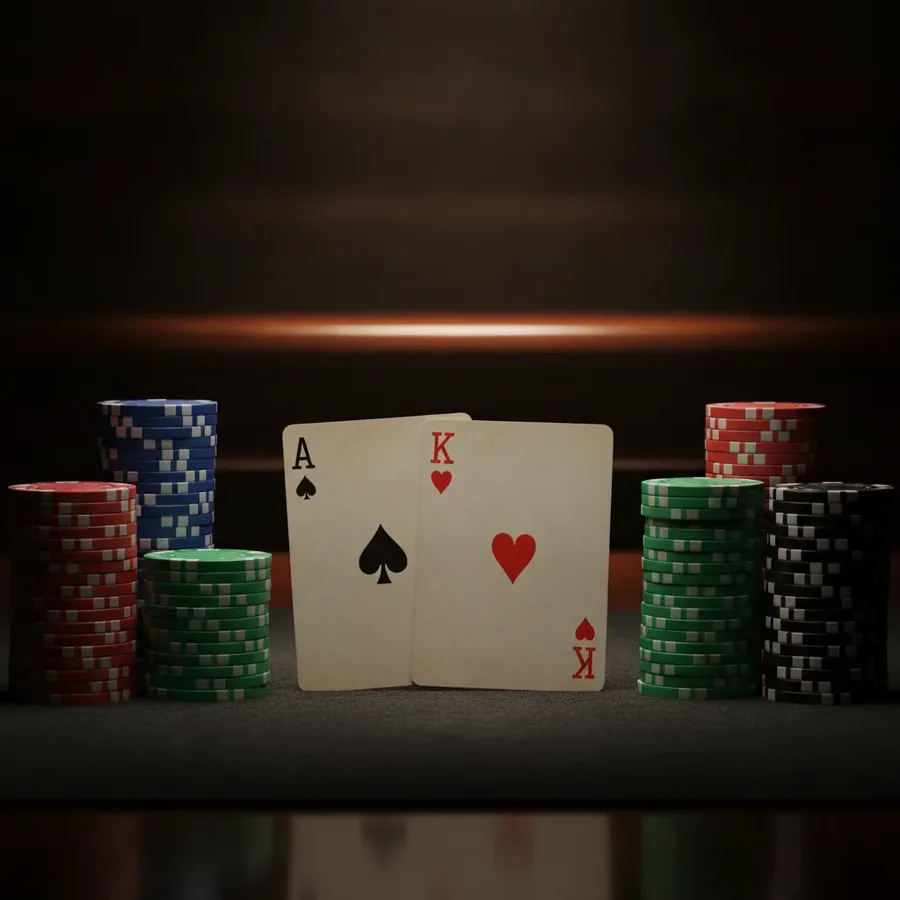
Bet Two Percent of Your Bankroll per Hand
A two percent stake per hand means a 100 EUR bankroll produces a flat bet of 2 EUR, while a 1,000 EUR bankroll produces a 20 EUR bet. The Infinite Blackjack table accepts stakes from 1 to 5,000 EUR, so a two percent rule fits comfortably inside that range for bankrolls between 50 EUR and 250,000 EUR. Blackjack Party has a lower ceiling of 1,000 EUR per round.
The six-deck 3:2 game has a house edge of 0.46%, so 100 EUR of total stakes costs 0.46 EUR on average. With a 2 EUR flat bet, the player gets 50 rounds from a 100 EUR bankroll before the theoretical cost reaches one full bet. The same bankroll at a 6:5 table with a 1.85% edge loses 1.85 EUR per 100 EUR staked.
The two percent rule protects the bankroll from the 7.47% house edge on the insurance side bet. Basic strategy always declines insurance except for card counters at a true count of +3 or higher. A beginner who never takes insurance keeps the main bet at 2% per hand and avoids the separate side bet that returns only 92.53%.
Ignoring the Basic Strategy Chart: 1 Percent Wasted
The six-deck game with S17, DAS, DOA and 3:2 reaches an RTP of 99.54% only when the player follows basic strategy exactly. The house edge is 0.46%, so 100 EUR of total stakes loses 0.46 EUR on average. Deviating from basic strategy adds errors, and a one percent loss of return turns a 99.54% game into roughly a 98.54% game.
A player who ignores the chart and takes insurance faces a separate side bet with an RTP of 92.53% and a house edge of 7.47%. Insurance pays 2:1, but the basic strategy always declines it. On a 10 EUR main bet, a full insurance stake of 5 EUR loses 0.37 EUR on average per accepted offer, and the long-run cost is far higher than the main game.
The 6:5 payout version shows how a single ignored rule can waste more than one percent. Replacing 3:2 with 6:5 adds exactly 1.39 percentage points to the house edge, moving the return from 99.54% to 98.15%. On a 100 EUR blackjack stake, the 3:2 game pays 150 EUR, while the 6:5 game pays only 120 EUR.
Surrender or Play On With 16 Against a 10
Late surrender lets the player give up the hand after the dealer has checked for blackjack and lose half the stake. The rule improves RTP by about 0.08 percentage points, because 50% of the stake is returned instead of risking the full bet on a weak 16 against a dealer 10. Early surrender is much stronger, worth up to 0.6 percentage points, but extremely rare.
On a 10 EUR bet, a 16 against a dealer 10 costs 5 EUR with late surrender, while playing out the hand risks the full 10 EUR. The six-deck 3:2 game without surrender has a house edge of 0.46%, while the Liberal Vegas Strip set with S17, DAS, resplit and late surrender reaches 0.28%. The 0.18 percentage point gap is the value of the extra player-friendly rules.
A beginner should compare the 0.08 percentage point gain from late surrender with the 1.39 percentage point penalty of a 6:5 payout. Surrender is a small improvement; the 6:5 rule is a major loss. On a 100 EUR blackjack stake, 3:2 pays 150 EUR, while 6:5 pays 120 EUR. The surrender option never offsets that 30 EUR difference.
A Side Bet Every Round: The Budget Lasts 30 Rounds
Infinite Blackjack offers four side bets: Any Pair, 21+3, Hot 3 and Bust It. The main game has an RTP of 99.47%, but every side bet carries its own separate house edge. A player who adds a side bet every round spreads the 2% bankroll rule across two or more wagers and shortens the session for the same total budget.
The insurance side bet has an RTP of 92.53% and a house edge of 7.47%, the worst figure on the blackjack page. A 100 EUR bankroll staked entirely on insurance loses 7.47 EUR on average, compared with 0.46 EUR on the six-deck 3:2 main game. The 30-round budget assumption means each round costs 3.33 EUR from a 100 EUR bankroll.
A 2 EUR main bet plus a 2 EUR side bet uses 4 EUR per round, so 100 EUR lasts 25 rounds, not 50. The side bet every round cuts the number of hands by half and exposes the bankroll to the higher edge. For a beginner, the practical rule is to keep side bets out of the two percent calculation and treat them as a separate, riskier budget.
Blackjack variants at a glance
| Variant | Payout | House edge | Rule | RTP |
|---|---|---|---|---|
| Blackjack Insurance (6–8 decks) | Insurance 2:1 | 7.47% | Separate side bet of up to 50% of the main bet when the dealer shows an ace. Basic strategy ALWAYS declines it (except for card counters at a true count ≥ +3). With a single deck the edge is ≈ 5.88% | 92.53% |
| Blackjack Single deck, classic rules, 3:2 | Blackjack 3:2, win 1:1 | 0.15% | Fewer decks = lower edge; one deck gives about −0.48 percentage points compared with 8 decks. Often offset by a 6:5 payout. | 99.85% |
| Blackjack Surrender (late surrender) – rule effect | 50% of the stake returned | −0.08 percentage points | The player gives up the hand after the dealer has checked for blackjack and loses half the stake. Improves RTP by about 0.08 percentage points. Early surrender is worth much more (up to −0.6 percentage points) but is extremely rare. | n/a (rule modifier) |
| Blackjack Liberal Vegas Strip (liberal rules, 3:2) | Blackjack 3:2, win 1:1 | 0.28% | The most player-friendly rule set: S17 + DAS + resplit + late surrender. Standard deviation 1.15 | 99.72% |
| Blackjack Split / double / H17 – rule effects | Double – stake ×2 with one card; split – up to 4 hands; split aces usually get one card each. | H17 +0.22 percentage points; RSA −0.08 percentage points; DAS −0.14 percentage points | Dealer hitting soft 17 lowers RTP by 0.22 percentage points; resplitting aces improves it by 0.08 percentage points; doubling after a split improves it by about 0.14 percentage points; 6 decks instead of 8 – about 0.02 percentage points. | n/a (rule modifiers) |
| Blackjack 6 decks, S17, DAS, DOA, 3:2 payout, basic strategy | Blackjack 3:2, regular win 1:1, insurance 2:1 | 0.46% | Dealer stands on soft 17; double down on any first two cards; doubling after a split allowed; no surrender. Basic strategy is required to reach this figure | 99.54% |
Early Surrender Is Gone From Many Tables
Early surrender is worth up to a 0.6 percentage point reduction in house edge, but appears extremely rarely on modern tables. That is more than three times the benefit of the late surrender rule, which improves RTP by only about 0.08 percentage points. A player who assumes early surrender is available can misplay borderline hands. The casino keeps the larger edge when the rule is removed.
Late surrender still returns 50% of the stake after the dealer has checked for blackjack. On a €10 bet, that means €5 comes back instead of losing the full amount. The house edge improves by about 0.08 percentage points when late surrender is present. Tables without any surrender option leave no escape from weak totals against strong dealer upcards.
Blackjack Liberal Vegas Strip includes late surrender as part of its player-friendly rule set, alongside S17, DAS, and resplit options. The listed RTP reaches 99.72% with a house edge of 0.28%. A table that strips surrender but keeps 3:2 payouts still moves closer to the 6-deck S17 benchmark of 0.46% house edge. Rule removals accumulate against the player.
One Deck vs Eight Decks: The House Edge Gap
Blackjack Single deck with classic rules and a 3:2 payout lists an RTP of 99.85% and a house edge of 0.15%. Fewer decks create a lower edge because drawing a matching card changes the remaining composition more strongly. One deck gives roughly 0.48 percentage points of advantage compared with eight decks. That lower edge is often offset by a 6:5 payout.
A 6:5 payout adds exactly 1.39 percentage points to the casino edge, more than any other single rule change. On a €10 bet, a blackjack pays €12 instead of €15 at 6:5. The single deck advantage of 0.48 percentage points is therefore wiped out almost three times over. A 3:2 single deck pays €15 on the same €10 blackjack.
The 6-deck benchmark with S17, DAS, DOA, and 3:2 payouts carries a house edge of 0.46% with an RTP of 99.54%. Moving from eight decks to six improves the edge by only about 0.02 percentage points. The largest deck-related benefit lies in going from eight decks to one. Basic strategy is required to reach the listed six-deck figure.
Split Aces: Only One Card per Hand
Resplitting aces improves RTP by about 0.08 percentage points, a modest but measurable rule benefit. The standard ace split rule gives each split ace only one card, preventing the player from drawing again to a soft total. That limit keeps the hand weaker than a normal split where additional cards are allowed. A starting ace remains strong only when a ten-value card follows.
Doubling after a split improves RTP by about 0.14 percentage points, nearly twice the value of resplitting aces. With ace splits limited to one card, doubling after the split is usually impossible on those hands. The player can still double on other split pairs when DAS is active. Liberal Vegas Strip includes DAS and resplit, contributing to its 0.28% house edge.
Splitting aces in Blackjack Single deck follows the same one-card restriction under classic rules. A split ace that receives a low card cannot be improved further, so the hand often plays as a weak total. The single deck RTP of 99.85% assumes the player accepts these limits and follows correct basic strategy. The 3:2 payout remains the main reason the variant stays attractive.
RNG Deals From a Virtual Eight-Deck Shoe
Blackjack Single deck explicitly uses one deck, but many RNG tables draw from a virtual eight-deck shoe. The difference in edge between six and eight decks is only about 0.02 percentage points. A player who sees an eight-deck shoe should still expect the same 3:2 blackjack payout when the rules are otherwise standard. The deck count matters far less than the payout ratio.
The 6-deck benchmark with S17, DAS, DOA, and 3:2 payouts produces a house edge of 0.46%. An 8-deck shoe with identical rules would sit only marginally higher at about 0.48%. The 99.54% RTP for the six-deck setup drops by less than one tenth of a percentage point. Deck count alone rarely changes the long-run cost in a meaningful way.
Insurance on a 6-8 deck shoe carries a house edge of 7.47% and an RTP of 92.53%. That side bet remains far more expensive than any deck-count difference, which sits below half a percentage point. A player who declines insurance and sticks to basic strategy keeps the main game edge near 0.46%. The virtual shoe size is a background detail compared with the side bet.
What the Peek Means When the Dealer Shows an Ace
Peek means the dealer checks the hole card for blackjack before players act on their hands. Late surrender is only available after this check, and it returns 50% of the stake when the dealer does not have blackjack. The rule improves RTP by about 0.08 percentage points. Without a peek, a player could surrender against a dealer who already holds blackjack, wasting the option.
Insurance is offered when the dealer shows an ace, and the peek decision determines whether the side bet pays out. The insurance side bet carries a house edge of 7.47% on 6-8 deck shoes. The 2:1 payout sounds generous but the long-run return is only 92.53%.
Blackjack Liberal Vegas Strip includes late surrender, which depends on the dealer peeking under a ten-value card before the hand continues. The variant's RTP of 99.72% and house edge of 0.28% assume this sequence is in place. A dealer ace with no blackjack lets the player surrender weak hands for half the stake. The peek rule therefore protects the player from losing the full bet unnecessarily.
Calling Late Surrender Correctly in Three Steps
Late surrender is the rule that lets the player give up a hand after the dealer checks for blackjack and take back half the stake, which is 50% of the amount wagered. The option is worth about 0.08 percentage points of return, so a 100 € stake that is surrendered returns 50 € to the player.
The step-by-step sequence is short: the dealer checks the hole card for blackjack, the player then decides whether to fold instead of playing the hand out, and half the original stake comes back while the other half stays with the casino. Folding is possible only after that check, which is what separates this from the far rarer early surrender that is worth up to 0.6 percentage points.
In practice the gain is small but real: the rule moves the house edge down by 0.08 percentage points, and on a 100 € hand the surrender costs 50 € instead of the full stake at risk. The decision only makes sense on the weakest starting hands, since strong totals should still be played out.
What a Natural Blackjack Actually Pays
A natural blackjack pays 3:2 under the standard six-deck rules, so a 100 € stake returns 150 €, while the same hand pays only 120 € when the table uses a 6:5 payout. The difference between the two payouts is 30 € on the same 100 € bet.
The 6:5 version adds exactly 1.39 percentage points to the casino's edge, which is more than any other single rule change, and it pushes the return down to 98.15% with a house edge of 1.85%. The 3:2 version with the same six decks, S17, DAS and DOA rules sits at an RTP of 99.54% and a house edge of 0.46%.
For the reader this means a 100 € natural is worth 150 € at 3:2 and 120 € at 6:5, a shortfall of 30 € every time the hand appears. Regular wins still pay 1:1 and insurance still pays 2:1, but the blackjack payout itself is the line that decides how much the table costs over time.
Soft 17: Does the Dealer Hit or Stand?
Soft 17 is a hand containing an ace counted as eleven, and whether the dealer hits or stands on it is one of the largest single rule choices in blackjack. Hitting soft 17 lowers the return by 0.22 percentage points, which is roughly half the effect of replacing a 3:2 payout with 6:5.
The step-by-step effect on cost is simple: on 100 € of stakes the H17 rule adds about 0.22 € to the average casino take, while the same 100 € under an S17 table costs around 0.46 € in total. Resplitting aces works in the opposite direction and gives back 0.08 percentage points.
Tables that stand on all 17s therefore return more to the player than tables that hit soft 17, and the gap widens further when doubling after a split is allowed, which is worth about 0.14 percentage points. The liberal Vegas Strip set combines S17, DAS, resplitting and late surrender for an RTP of 99.72%.
Contact
Live - online chat
Banking









Providers












Christchurch Casino 2026